
One of Starling Salon’s favorite Aveda cutting educators is back. From the cozy aisles of Air Canada, Aran Beattie set down the poutine long enough to give one of his favorite teams a dip into texture. That’s right, another texture class to find even more ways for the curly crowd to flourish. To be honest, texture is always trending.
Aran owns Vanity House in London, Canada, but travels far and wide for like-minded hair folk. Count yourself lucky if he’s educating your stylist. Besides running a successful business, he’s been a finalist for more awards than there’s space to mention. He’s a fountain of cutting expertise.
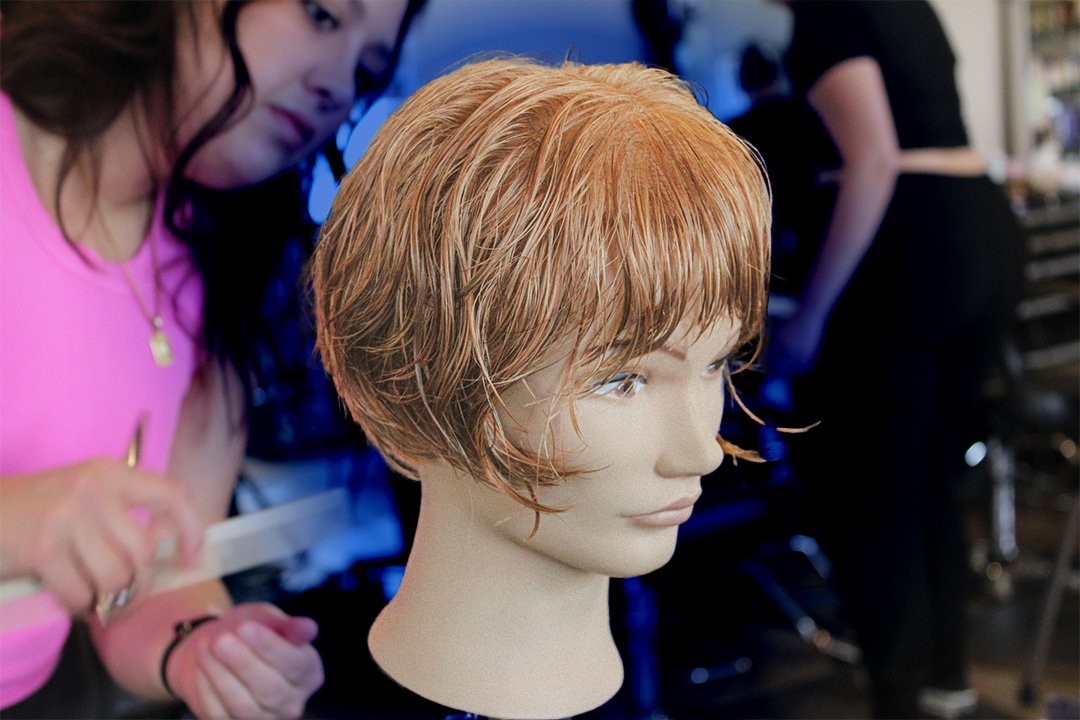
Did someone say bixie?
When it comes to trends, his philosophy is simple: “You either have a cut story or a color story. If the cut is your main focus, you can scale back on the color and still do cool things.”
Color stories are easy to recognize. The most vibrant color stories shine from across a football field, but even subtle color stories stand out to observers more than cut stories typically do. A color story (meaning you favor your hair color over your haircut) can be the current trend of lived-in color, like soft balayage, up to wild vivid rainbows that take multiple sessions to plan and execute. When you spend all that time thinking about which colors and placements you like most, there’s little room left to consider the cut. Most often, too much cutting will remove hair with vital points of the color story. That’s why Aran suggests focusing on one or the other.
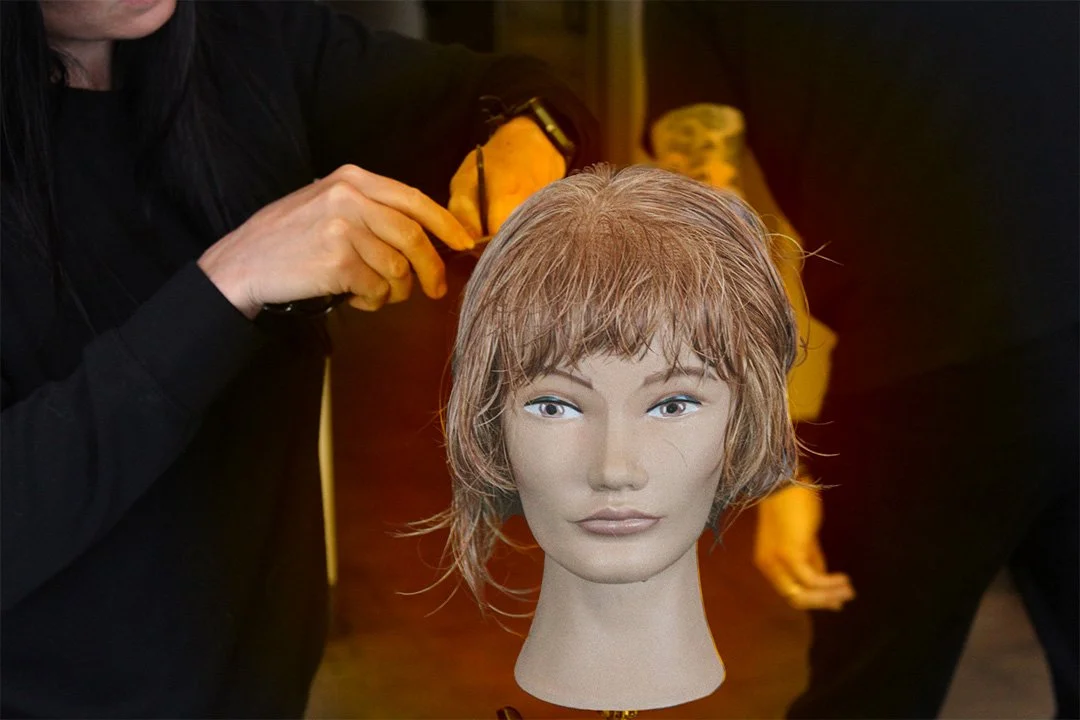
You’ve got to cut with intention.
Cut stories work harder to pull you in. They complement your hair type, create edgy silhouettes, or enhance the longevity of the cut, but they’re rarely as flashy as a color story. Since the current trend is cuts that last longer, the solution is [DRUMROLL] long hair with texture. Bet you didn’t see that one coming.
Not everything needs to be symmetrical. When you’re splitting hairs, there is a difference between asymmetry and visual symmetry. Questions like, “Why aren’t both sides of my face frame the same length?” and “Why does it look like my stylist is cutting unevenly?” are valid, but they’re pieces of the big picture. Texture lives where it needs to, so if you, like millions of other people, have that one heavy spot where hair grows thicker, you’ll likely receive more texture there. Aran’s tip, “If there’s something heavy or uneven, go through and tip [with your razor] to soften everything up.”
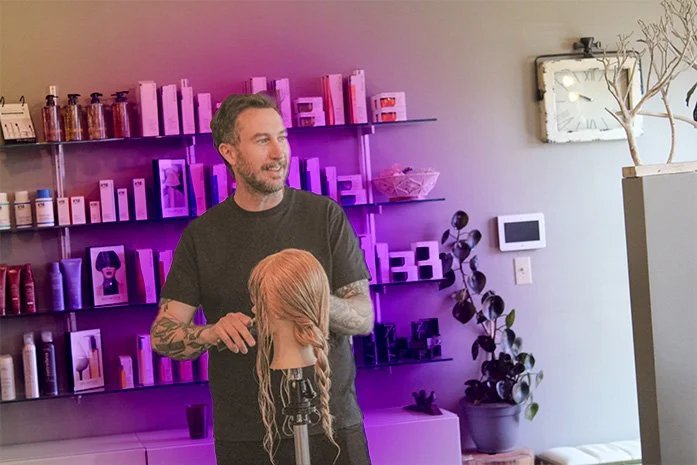
Aran just told a really funny joke. You had to be there.
Asymmetry is intentionally looking different on either side. Visual symmetry looks symmetrical even if the technical cut isn’t. It’s more customized to your head shape or hair density. Your masterful shag will look balanced even if the internal details look like chaos.
Carving petals, a blossoming term for shaping curved points around the face and neck, looks wacky if you pay attention. It’s usually cut with a razor and makes short pieces on either side of the longer point, creating super short hair next to much longer hair. Don’t worry, it sounds strange but looks phenomenal. Instead of traditional hand positioning, a lot of detailed texture, including petals, will pinch a small section of hair between the fingertips and slide down both sides with the razor. Voila, shapely fringe.
Besides demonstrating a shag and French bob for the class (if you’ve never seen Amélie, why not? Stop reading right now, go watch, and when you come back, you’ll be itching for your own crazy, cute French bob), Aran brought hot-button chit-chat. For the unlucky masses of hair professionals learning in stuffy, boring environments, Starling Salon feels your pain. To a degree. At some point, they’ve all taken those same classes, which might explain why, when given the proper educator and environment, they enjoy learning.

Shagadelic.
Learning at Starling Salon looks like friends swapping personalized techniques, inside jokes, and wild salon stories. If that sounds less like a classroom and more like a slumber party to you, you’re not totally wrong. Consider this: Were your childhood slumber parties more memorable than your classes? The Starling Salon cool kids learn best with equal parts hands-on mannequin manipulation and chatty anecdotes. All this to say, your stylist is always expanding their knowledge, be it about creating strong silhouettes on a French bob, André 3000’s new flute album, which is better: ketchup chips or ketchup Cheetos, or the perfect amount of texture for a curly shag. They’re some of the most well-rounded artists in Denver.